
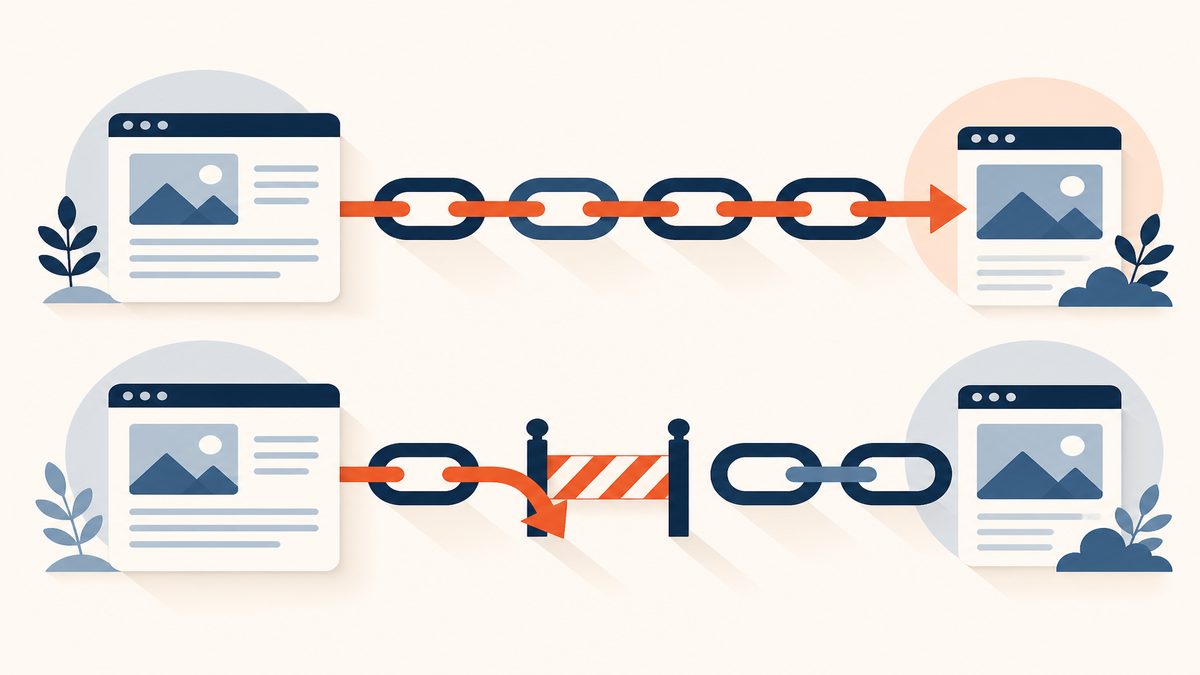
Every link you buy carries a rel attribute, and that attribute decides whether search engines may treat the link as an endorsement. It is the single most consequential detail in a placement, and the one most often left unconfirmed until after publication.
The four values you will encounter
- Dofollow. Not an attribute at all, but the absence of one. A plain link is followed by default and can pass ranking signals.
- Nofollow (
rel="nofollow"). Introduced in 2005 to fight comment spam. Tells search engines not to treat the link as an endorsement. - Sponsored (
rel="sponsored"). Introduced in 2019 for paid placements. This is the attribute Google asks publishers to use on advertising and paid links. - UGC (
rel="ugc"). For user-generated content such as comments and forum posts.
What changed in 2019, and why it matters
Google moved from treating nofollow as a strict directive to treating it as a hint. In practice this means the search engine reserves the right to consider a nofollowed link for discovery and ranking, but makes no promise that it will.
Read that carefully, because it is often misreported in both directions. Nofollow links are not worthless, and they are not equivalent to followed links. They are links whose treatment is entirely at Google's discretion, which means you cannot plan around them.
When a nofollow placement is still worth buying
Judging links purely by their rel attribute misses most of what a placement does. A nofollowed link on a publication your buyers actually read can be worth more than a followed link on a site nobody visits.
Nofollow makes sense when:
- The publication has genuine readership in your market, and referral traffic is the point.
- You are building brand presence in places where being cited matters more than the link.
- The site is large enough that its editorial policy is non-negotiable, and being there is worth accepting the terms.
Nofollow rarely makes sense when the site has little traffic and you are paying primarily for a ranking signal. In that case you are paying for something the link cannot deliver.
The sponsored attribute question
This is where buyer and publisher interests genuinely diverge, and pretending otherwise leads to disputes.
Google's guidance is that paid links should carry rel="sponsored". A publisher following that guidance is protecting their own site. A buyer who paid for a followed link and receives a sponsored one did not get what they expected.
Neither party is behaving badly. The mistake is leaving it unstated. Confirm the rel attribute before the order is placed, not after publication, and get it recorded on the order rather than agreed in a chat.
How to make sure you get what you agreed
Three practical steps:
- Ask before ordering. Every BlogReach offer states its link attribute on the listing. If it says "Confirm before order", message the seller and get it in writing.
- Record it on the order. The promised attribute belongs on the order record so there is a factual reference if the delivered page differs.
- Verify after delivery. View the published page's source and find your link. The attribute is either there or it is not.
BlogReach monitors delivered links against the agreed terms and flags a change in the rel attribute the same way it flags a removed link, so a placement that quietly switches to nofollow months later surfaces in your dashboard rather than going unnoticed.
A note on how to think about the mix
A backlink profile made entirely of followed links from paid placements does not look like a profile a real publication earns. Some proportion of nofollow, sponsored and UGC links is normal and expected. Buying only followed links is itself a pattern.
Filter for the link type you need on the marketplace, where each offer states its attribute up front.